Americans who’ve watched law enforcement struggle in blue states over the past decade recognize a troubling pattern. Defund-the-police movements have drained department budgets, mandatory diversity seminars have replaced tactical training, and officers now prioritize sensitivity protocols over crime scene investigations. The consequences? Predictable—and devastatingly costly.
Now families nationwide are watching Rhode Island with growing dread as a killer remains at large. Authorities tasked with catching him appear completely out of their depth. What’s unfolding in Providence should alarm every American who views public safety as nonnegotiable.
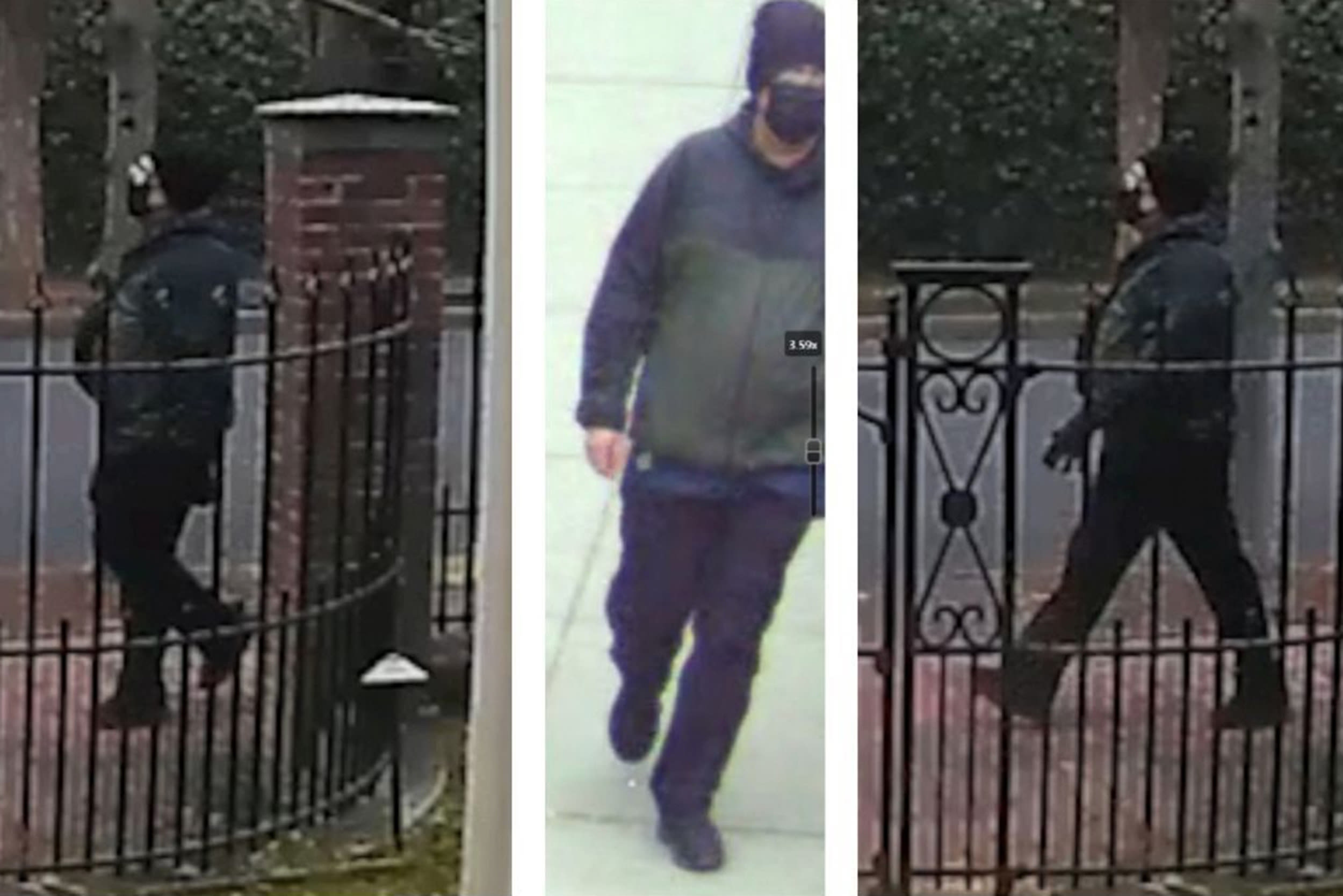
Providence Police Chief Col. Oscar Perez labeled the manhunt “the most intense investigation going on in this nation.” Officials have shared grainy surveillance images showing the suspect walking before and after the shooting but offer little clarity. The nation’s “most intense” search has yielded only blurry photos and a public plea for assistance.
The Brown University shooting occurred five days ago. Students remain terrified, families demand answers, yet Rhode Island officials delivered minimal progress. At Wednesday’s press conference, Attorney General Peter Neronha stated investigators possess “zero information” about the suspect’s motive and claimed he “could be anywhere.”
This situation highlights a critical failure: one of America’s most prestigious universities—an Ivy League institution—appears to have insufficient security camera coverage to track a murderer. The images released resemble footage from a 2004 flip phone. President Trump criticized the lack of cameras on Truth Social, stating, “Why did Brown University have so few Security Cameras? There can be no excuse for that.”
Police Chief Perez initially told reporters they had “found no items of interest,” later reversing course to claim investigators “seized and found physical evidence.” Such contradictions undermine confidence in the process.
Rhode Island officials face an uncomfortable question: Have progressive policies weakened their law enforcement agencies’ ability to solve crimes? Police departments across liberal states have recently prioritized implicit bias workshops, DEI certification requirements, community reimagining committees, and sensitivity training over investigative skills. Rhode Island has embraced these trends enthusiastically.
Could this explain why the “most intense investigation going on in this nation” has produced no results after five days? Were officers trained to catch killers—or memorize pronoun guidelines? The question remains starkly unresolved.
A key concern involves Brown University’s security infrastructure. During Wednesday’s press conference, a Rhode Island radio host accused officials of deliberately removing cameras due to sanctuary policies to avoid recording illegal immigrants. Attorney General Neronha became visibly irritated when pressed on missing footage, insisting they were providing “the best evidence” to identify the suspect. Yet if that evidence amounts to pixelated images, it reveals institutional priorities over safety.
Elite liberal universities often position themselves as moral authorities on justice and compassion, from climate policy to criminal reform. But when students needed basic protection, where were the cameras? Where was functional security infrastructure? Ideology appears to have overshadowed safety.
The victims’ families deserve more than press conferences filled with contradictions. The American public deserves clarity on how a killer has vanished for nearly a week while authorities flounder. Rhode Island taxpayers require honest answers about whether their law enforcement agencies have lost basic competence due to progressive orthodoxy.
This isn’t abstract—it’s about whether those tasked with protecting citizens can fulfill their duties. Until blue states acknowledge that policies labeled as progressive carry real-world consequences—measured in unsolved cases and ongoing danger—tragedies like this will continue raising urgent questions.