The survival of this republic has always hinged on one straightforward promise: every lawful citizen’s vote counts equally. That is the foundation upon which all political discourse rests. When confidence in that promise begins to erode—when legitimate questions arise about ballot eligibility and whether oversight mechanisms are functioning effectively—all other political debates become secondary.
Tax reform, border security, national defense: these issues ultimately stem from whether our electoral system remains legitimate.
Currently, a president is championing common-sense election reforms that reflect the desires of most Americans. Yet Washington has repeatedly demonstrated its ability to stifle popular initiatives through committee room obstruction. The machinery of gridlock continues to grind on both sides of the aisle. The question now is whether citizens will remain passive as this pattern unfolds.
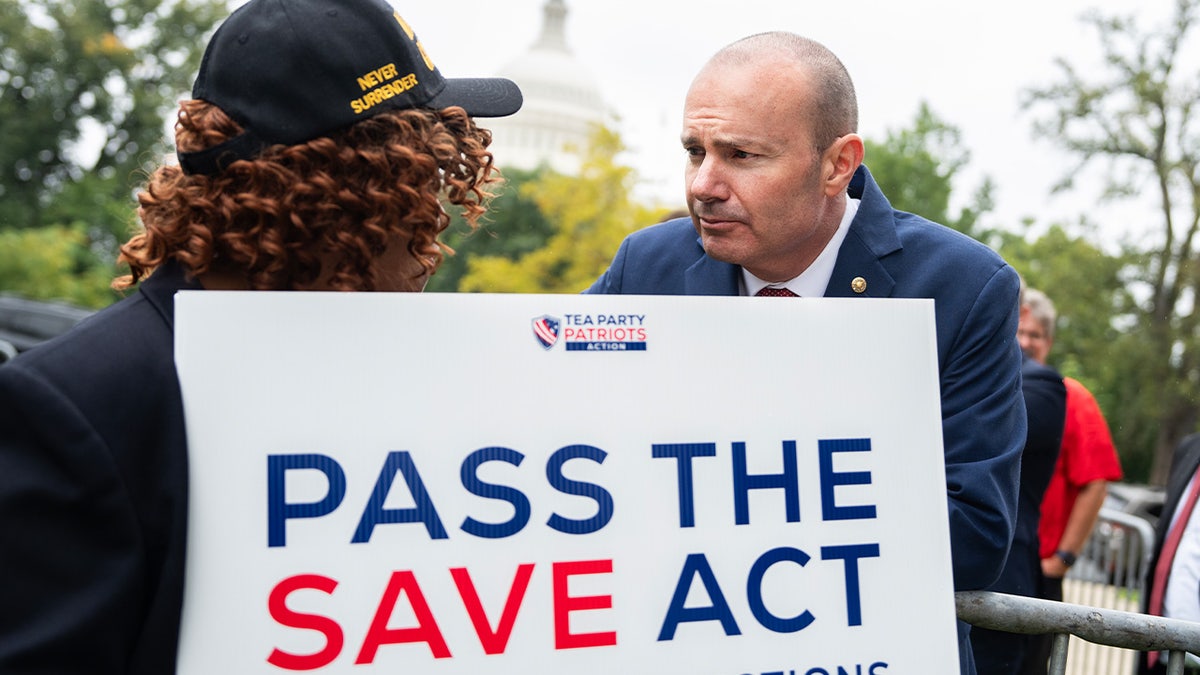
President Donald Trump has actively supported House GOP leaders’ efforts to pass the SAVE America Act, a bill some fiscal conservatives have questioned due to its potential federal spending increases amid a national debt nearing $39.5 trillion. Speaker Mike Johnson of Louisiana is leading the push to include key provisions through budget reconciliation, bypassing Senate Democratic support to get the legislation directly to the president.
Trump has made it clear he is not merely suggesting or monitoring the situation. He directly posted on Truth Social demanding that all House Republicans “VOTE YES” and “UNIFY, and fight for THE SAVE AMERICA ACT.” The bill would establish a federal voter identification standard requiring proof of citizenship at registration. These measures are not radical—most functioning democracies already implement similar requirements.
Representative Marlin Stutzman of Indiana, a Budget Committee member known as a fiscal hawk, stated: “As a fiscal hawk, I understand the apprehension about lacking clear spending offsets, but as an American, it is far more irresponsible to maintain elections without the security the SAVE America Act provides.” Such reasoning highlights why some priorities cannot be deferred simply because budget spreadsheets appear unfavorable.
The so-called “voter suppression” argument collapses when considering public support. A Harvard CAPS/Harris poll found 81 percent of Americans back voter ID requirements, including 79 percent of independents and 70 percent of Democrats. Support for the SAVE America Act specifically stands at 71 percent. When seven in ten voters from the opposing party endorse a bill, those blocking it are not defending democracy—they are protecting their own interests.
During his primetime address, Trump claimed that 278,000 noncitizens were registered to vote in federal elections. Even if this figure were halved, every illegitimate registration dilutes the voice of lawful citizens. This reality should concern everyone.
Some conservative objections merit attention. Rep. Eric Burlison of Missouri has raised concerns over the absence of spending offsets and Planned Parenthood defunding language. The House Freedom Caucus has signaled conditional support but insists on the full SAVE Act, warning that “any watered-down version that makes SAVE policies optional? There will be issues.” These are genuine concerns from fiscal conservatives.
Other resistance comes from Senate Minority Leader Chuck Schumer, who declared “the SAVE Act ain’t passing.” He relies on Republican divisions to achieve this outcome. Senator Thom Tillis dismissed the effort as “a waste of time,” arguing implementation before November is impossible. With Republican allies expressing such defeatism, Schumer requires little effort to maintain his position.
Republican strategist Brian Darling suggests attaching the SAVE Act to a government funding measure would force Democrats into a difficult choice: accept popular election reforms or risk a shutdown. This strategy could compel accountability.
A senior House GOP aide warned against abandoning fiscal discipline “the moment it becomes politically inconvenient.” While this principle is sound, perspective matters. The $95 billion spending framework covers an entire decade, while the national debt stands at $39.5 trillion. The SAVE America Act does not cause the current debt crisis—generations of unchecked bureaucratic expansion have done that. Securing electoral integrity is not a frivolous expense; it is an investment in democracy’s foundation.
With midterms approaching rapidly, every delay risks leaving vulnerabilities unaddressed. Trump urged Americans to “pick up your phone and call their representatives in the House and Senate to demand passage of the SAVE America Act without delay.”
If we cannot ensure that only citizens choose our leaders, then the arguments we have in this country become mere theater. And Americans deserve far more than that.