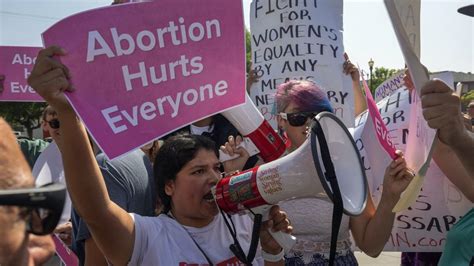
In a civilized society, the law draws moral lines. It guards those who cannot guard themselves and holds firm where conscience demands it. The most fundamental of those lines has always been life itself. When government erases the boundaries shielding the most vulnerable among us — not because the protections failed, but because they became politically inconvenient — something deeper than policy has ruptured.
For years, even many supporters of abortion rights conceded that late-term procedures should be reserved for genuine medical emergencies. That fragile agreement, once treated as untouchable common ground, is now being deliberately shredded by politicians who view the unborn not as lives worthy of defense but as collateral in an ideological crusade. And the latest blow is staggering.
Massachusetts Governor Maura Healey signed a bill on Monday that expands abortion up to the time of birth in the state. The legislation, passed at the end of July, removed prior restrictions placing abortions after 24 weeks of gestation solely for life-threatening medical circumstances. Massachusetts had already permitted abortions up to 24 weeks — nearly six full months — with exceptions for emergencies. The new law eliminates all such limitations, allowing abortion “through all weeks of pregnancy based upon the professional judgment of the physician.” It requires no medical complication, second opinion, or oversight committee. One doctor’s decision can legally terminate a fully viable child at eight or nine months.
State Rep. Alyson Sullivan-Almeida noted: “The precedent we’re setting is that a mother can get an abortion up until the moment of birth for a healthy, viable baby.” Her colleague, Rep. Joseph McKenna, called it “a significant change to the law,” describing it as expanding “an extremely progressive abortion policy.” He used generous language.
Democrats marketed this bill with genuine sorrow, citing stories like that of Kate Dineen, who learned at 33 weeks her son had suffered a catastrophic stroke in utero. Her pain is real and deeply felt. Yet the law’s architects admitted nothing restricts late-term abortions to such tragedies. State Rep. Michael Day explicitly stated: “We’ve decided to get away from all the exceptions and trust our medical professionals.” Translation: every guardrail was deliberately removed.
Healey herself declared, “I promise that no matter what Donald Trump or Republicans in Congress do, we’re going to continue to make sure women and families have access to the health care they need.” This pledge reveals the bill’s true purpose: it was never about medicine but scoring political points by erasing legal protections for children who could survive outside the womb.
The Dobbs decision returned abortion regulation to the states, yet that transfer of authority was never meant as a blank check to strip viable human beings of all legal safeguards. The Fourteenth Amendment guarantees no state shall deprive any person of life without due process. A child weeks from natural birth, fully capable of surviving independently, presents a constitutional question the Court cannot ignore.
This law does not reverse Dobbs but establishes that state power has boundaries — especially when a state decides a healthy, full-term child deserves zero legal recognition. The image from Healey’s signing ceremony should disturb every American who believes human life carries inherent dignity: elected officials clapping, smiling, posing for cameras. They were applauding the erasure of legal protection for children who could survive on their own — if anyone bothered to let them.
Massachusetts has blown past a boundary demanding immediate judicial response. Not next term. Not eventually. Now.