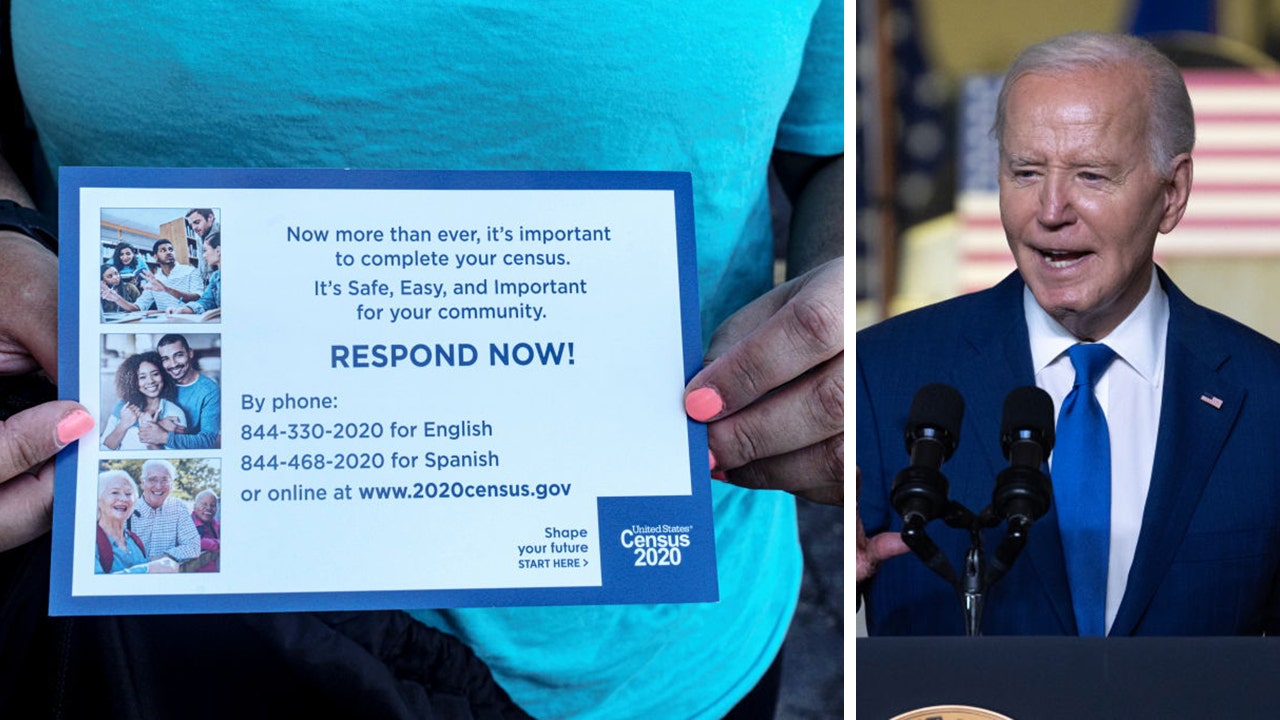
Every ten years, America redraws the map that determines who speaks for you in Washington. The census count decides how many House seats each state gets—and by extension, the number of Electoral College votes that shape presidential outcomes. Most Americans assume this process reflects the will of citizens. They’d be wrong.
For decades, the U.S. census has counted every individual within our borders—legal residents, visa holders, and illegal immigrants who have no right to vote, work, or remain in the country. That headcount doesn’t just allocate federal funds; it determines raw political power. States that have opened their doors to unchecked migration have quietly harvested congressional seats at your expense.
A new House GOP proposal could reshape the nation’s congressional map by excluding noncitizens from apportionment calculations. Rep. Andrew Clyde (R-Ga.) has introduced legislation known as the Make Apportionment Great Again (MAGA) Act, which would count only U.S. citizens when determining how many House representatives each state receives.
The bill would fundamentally alter congressional representation nationwide, with states housing the highest noncitizen populations being particularly impacted.
Clyde’s legislation addresses a problem that decades of border lawlessness have made impossible to ignore. Without it, the system will continue rewarding states that shelter illegal immigrants while shortchanging those who follow the rules.
A 2024 report from the Center for Immigration Studies reveals how severely the current system distorts representation: immigrants—both legal and illegal—generated a net gain of 14 House seats in Democratic-leaning states. Republican states, meanwhile, held 10 fewer seats than they deserved. This is no rounding error—it’s a massive, structural transfer of political power driven entirely by noncitizen counts.
According to the U.S. Census Bureau, immigrants make up roughly one-fifth of the population in California, New Jersey, New York, and Florida. Sanctuary jurisdictions—cities and counties that actively obstruct federal immigration enforcement—exacerbate the distortion. Illegal immigrants sheltered within these communities are counted alongside lawful citizens, inflating a state’s congressional grip.
The issue is not hypothetical. A resurfaced video clip from a 2021 House Foreign Affairs Committee briefing captured Rep. Yvette Clarke (D-N.Y.) admitting why she welcomed more migrants into her Brooklyn district: “I need more people in my district, just for redistricting purposes,” she said. Clarifying further, she noted that her local Haitian community could “absorb a significant number of these migrants.”
Her office declined to comment when Fox News reached out.
When a sitting congresswoman openly admits that immigration policy serves as a redistricting tool—during an official hearing—the political spin is gone.
Critics may invoke the Fourteenth Amendment, which apportions seats based on “the whole number of persons in each State.” But context matters. That language was ratified in 1868 to guarantee full representation for formerly enslaved Americans denied their rights. Nobody in that post-Civil War Congress envisioned handing political power to states based on illegal immigration.
Clyde’s bill takes a pragmatic approach: it would require reapportionment by 2027 using existing records and add a citizenship question to the 2030 census. Respondents would identify as citizens, U.S. nationals, lawful residents, or unlawful residents. Legal challenges are expected—but they will come from those who benefit most from the current system.
The principle underneath all of this is as old as the republic: representation in Congress belongs to citizens—the people who pay taxes, serve on juries, defend the nation, and cast ballots. Unlawful immigration has been allowed to silently distort that foundational compact for far too long.