Every American who has ever tracked a package online knows the drill: a barcode, a scannable label, and a standardized envelope – basic logistics ensuring your order arrives intact. Yet the U.S. federal government applies far fewer safeguards to ballots than UPS does to sneakers.
For years, the debate over mail-in voting has centered on whether simple verification standards constitute voter suppression or sound operational practice. The Trump administration attempted to answer with postal regulations so mundane they could have come from a warehouse manual. But courts had other ideas.
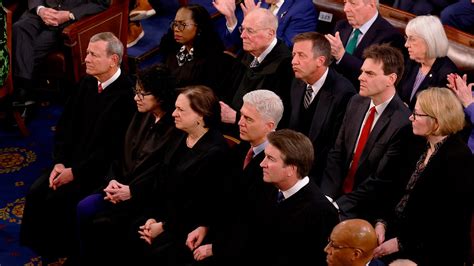
This Monday, the Supreme Court denied President Donald Trump’s administration’s request for relief from a universal injunction blocking its mail-in ballot rules. Justices Samuel Alito and Clarence Thomas firmly dissented, arguing that plaintiffs relied on claims previously deemed weak by the court.
In an unsigned order with no explanation from the majority, the Court blocked the administration from implementing standardized mail-ballot requirements before the 2026 midterms. The decision offers no reasoning, no engagement with the merits, and simply denies the request – while two justices refused to accept that outcome quietly.
Alito’s dissent was precise: he wrote that the Court “incorrectly denies the Government’s application for a stay of a universal injunction” and noted some plaintiffs lacked standing altogether. He argued others were pursuing what the Court itself labeled a “Hail Mary pass” that “rarely succeeds.” Yet somehow, the pass connected.
“The Government has made the showings necessary for a stay, so I respectfully dissent,” Alito concluded. This was not hedging but a clear assertion of ballot security as a constitutional imperative – while his colleagues stepped over it.
The decision is especially troubling due to the silence from the bench. The majority issued nothing: no opinion, no rebuttal to Alito’s arguments, and no attempt to justify why standardized ballot procedures – which the Postal Service almost certainly has authority to implement – should be blocked by a single lower court injunction.
Alito and Thomas stood as the only justices willing to state plainly that the law supports these measures. The U.S. Postal Service holds broad statutory authority over mail handling, and two justices acknowledged it while others chose the easy road.
Justice Brett Kavanaugh wrote a concurrence that deserves scrutiny: he conceded there is “at least a fair prospect” the rules fall within postal authority – meaning they are probably legal. Yet he voted against implementation because state and local officials lack time to comply before November, calling such enforcement “arbitrary and capricious” under the Administrative Procedure Act.
This reveals the trap: proposing election reforms early invites court battles. By the time cases reach the Court, opponents cite proximity to Election Day as a reason for delay. Reforms die not on their merits but the ticking clock.
The Trump standards would have required ballots to bear an election logo, arrive in scannable envelopes, and carry unique barcodes per voter. Election officials would submit envelope designs to the Postal Service and upload voter data online, with non-compliant mailings returned for correction.
This is not suppression; it’s inventory management – a standard practice in all functioning logistics operations without controversy.
Alito and Thomas did their duty: they examined the law honestly and told Americans this injunction should not stand. The rest of the Court either disagreed in silence or agreed on substance but hid behind time constraints.
The 2026 midterms will now proceed without standardized tracking, scannable verification, or basic safeguards Americans expect for every important mail delivery. Two justices fought for your ballot. The question heading into November is whether anyone else will.