In any functioning society, when a court instructs you to act and you refuse, consequences follow. Skip a courtroom appearance, evade a legally mandated fine, or disregard judicial orders—watch as the rule of law swiftly responds with contempt charges, wage garnishment, or even incarceration. This is how lawful systems operate, and most Americans over twelve intuitively understand this principle.
Yet one glaring exception exists to this foundational rule: if you are a migrant who has exhausted all legal options, received a final deportation order, and deliberately choose not to leave—do not worry. A federal judge in Boston recently declared you the victim of systemic neglect.
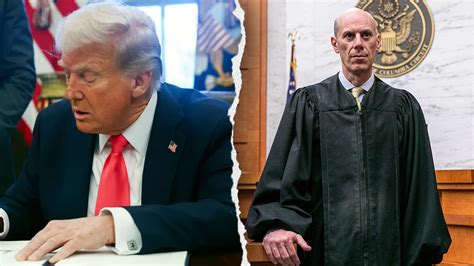
U.S. District Judge George O’Toole in Boston issued his ruling on Monday, blocking the Trump administration’s efforts to impose fines up to $1.8 million on migrants who ignore deportation orders after receiving final removal notices. The decision followed a class-action lawsuit filed last year by two migrants among thousands penalized by the Department of Homeland Security for noncompliance.
Judge O’Toole—a Clinton-appointed judge—did not merely halt the fines on technical grounds. He framed the plaintiffs as vulnerable individuals in an “economically precarious position,” burdened by what he termed the government’s “exorbitant fines.” He highlighted one plaintiff, “Nancy M.,” who works sixty hours weekly and reportedly experiences anxiety over her situation. Heartbreaking details—until you recall she was ordered to leave the country and chose not to comply.
That is not an “economically precarious position.” It is a deliberate decision to defy a lawful order—a choice Congress explicitly intended to carry meaningful financial penalties through decades of lawmaking.
What makes this ruling particularly alarming is that the fines Trump’s administration enforced are not new policy inventions but direct mandates from the Illegal Immigration Reform and Immigrant Responsibility Act of 1996—signed into law during Bill Clinton’s presidency. This statute authorizes civil penalties for individuals who “willfully fail to depart” after receiving a final removal order.
For nearly thirty years, no administration enforced this provision. President Trump’s executive order, titled “Protecting the American People Against Invasion,” finally activated these tools. The result? Over 103,000 fines totaling approximately $84 billion—proof that countless migrants have defied deportation orders with zero consequences for years.
Rather than acknowledging this figure as evidence of widespread noncompliance, Judge O’Toole interpreted it as proof the government is overly harsh. He sided with the Immigrant Legal Resource Center, an activist group that filed the class-action suit, arguing the administration violated the Administrative Procedure Act by skipping a public comment period before streamlining penalties. A procedural technicality dressed up as constitutional doctrine.
The reality unfolding here is stark: a minor procedural oversight has been weaponized to undermine congressionally authorized enforcement mechanisms. The loudest supporters of this ruling are Democratic lawmakers who prefer immigration enforcement to remain theoretical, including Senators Alex Padilla and Dick Durbin, who recently urged DHS to pause penalties they labeled “improper” for “law-abiding immigrants”—a term that describes those who ignored final court orders.
Meanwhile, millions of legal immigrants who waited years, completed every form, paid all fees, and adhered to every rule now watch this spectacle, questioning what their patience secured. The message from Judge O’Toole’s courtroom is clear: defy the rules long enough, and eventually, the system will adapt around your defiance.
The Trump administration will almost certainly appeal this ruling—and they should do so vigorously. Voters granted this president a mandate to enforce immigration law, not to witness unelected judges dismantle enforcement through sympathetic rulings one by one.
This case underscores why judicial appointments matter profoundly. The upcoming midterms carry stakes far beyond single policy battles. Every Senate seat is a vote on who occupies federal benches—and as this ruling reveals, the judges who sit in those chairs decide whether laws Congress writes are worth the paper they’re printed on.