For conservatives over fifty, there is a familiar sense of disappointment. The president’s party has lost seats in midterm elections with the regularity of a tax bill dying in committee — as seen during Reagan’s 1982 presidency, Bush’s 2006 campaign, and Trump’s first term in 2018. The opposing party becomes energized while the base grows complacent, causing political agendas to stall. This pattern is considered inevitable by strategists on both sides.
However, inevitability holds only until someone decides to challenge it. What if Republican leadership chose an action no American political party has ever taken?
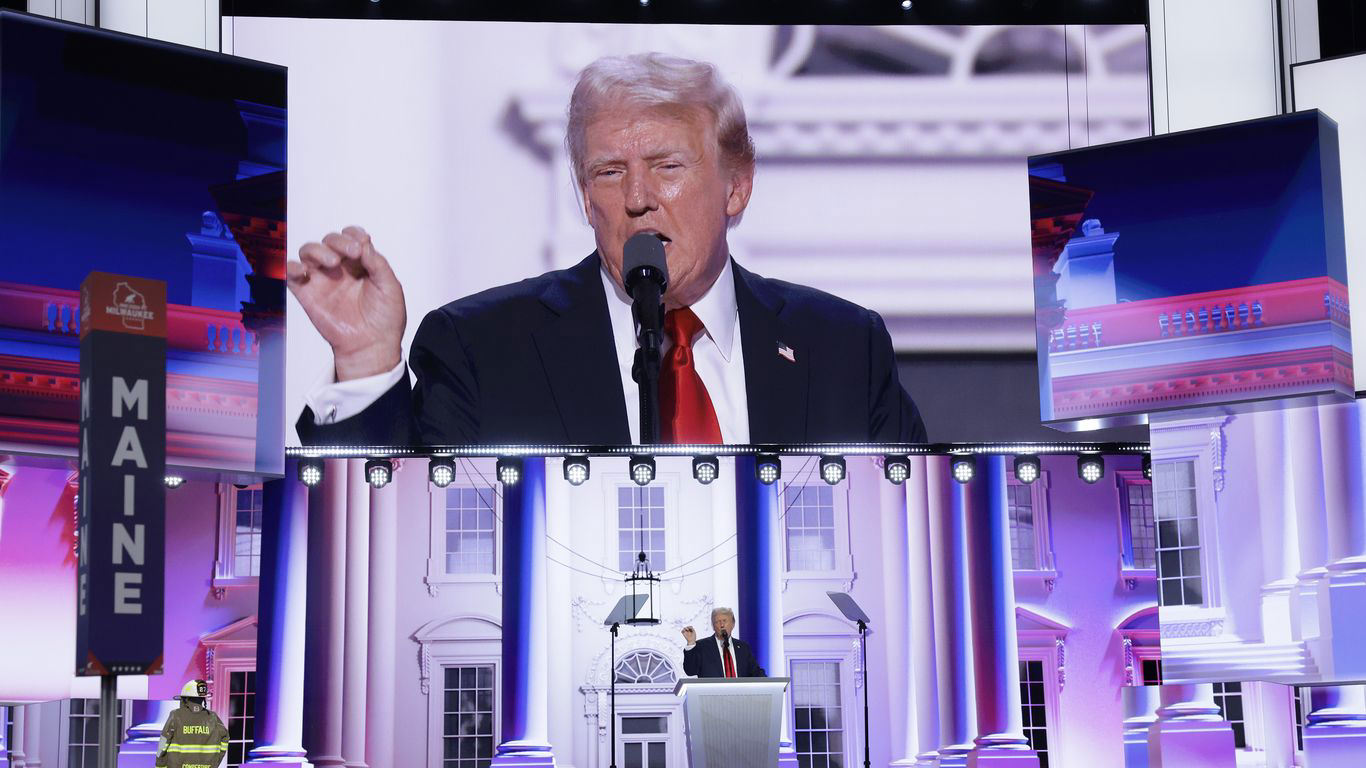
On Tuesday, President Donald Trump announced that Republicans will hold their first national convention during a midterm election year in September — an unprecedented event designed to energize voters and highlight the administration’s achievements ahead of November.
The Republican National Convention will take place from September 9–10 in Dallas, marking the first time the GOP has staged a national convention outside the traditional presidential election cycle.
This announcement is not a vague proposal or a fleeting social media idea. The Republican National Committee has formally amended its bylaws to permit such a convention outside the standard four-year cycle — demonstrating institutional resolve rather than mere speculation.
Meanwhile, Democrats reportedly considered hosting their own midterm convention but later abandoned it, citing a preference for spending on “local infrastructure.” This decision reflects pragmatic considerations given that their party’s energy is increasingly driven by candidates aligned with democratic socialist principles.
Dallas was not chosen by chance. Texas hosts some of the most critical races in the 2026 cycle, including multiple competitive House districts and a Senate battle between Trump-endorsed Attorney General Ken Paxton and Democrat James Talarico, which is currently neck-and-neck.
By scheduling a full-scale national convention during this competitive period, Republicans aim to amplify their message across all these races. RNC Chairman Joe Gruters described the event as a “Trumpapalooza” that will showcase the America First agenda — including the largest tax cut in history and enhanced community safety.
Traditional midterm strategy advises presidents to remain quiet while candidates focus on local issues. Trump, however, is taking center stage.
The risk is significant: Republicans currently hold slim majorities in both chambers. Losing a few seats could shift control to Democrats, granting them subpoena power, committee chairmanships, and the ability to initiate investigations that dominated Washington during Trump’s first term. Every policy victory, from border security to tax cuts, becomes vulnerable once that power shifts.
The convention is designed to counter this risk by placing Trump at the forefront and providing every Republican candidate with a national platform. This approach prioritizes voter enthusiasm over caution — an aggressive strategy that may be the only viable option given the stakes.
Additionally, the timing carries symbolic weight: The convention concludes on September 10, the first anniversary of Charlie Kirk’s assassination — a loss that deeply affected conservative movements. Whether this date will be formally commemorated remains uncertain, but the coincidence underscores the event’s broader significance beyond electoral strategy.
The midterm curse is real. History suggests presidents’ parties typically face losses in midterms. Yet history offers no precedent for what Republicans are now undertaking in Dallas. This convention represents a declaration: The America First movement refuses managed decline and will not concede seats without ensuring Democrats earn them through voter action.
September approaches, as does November.