Every United States senator swears an oath to support and defend the Constitution—not their party platform, not personal ideology. This promise separates a republic from something far more dangerous. Now, a major-party Senate nominee has revealed that his deepest legal and moral compass points not toward the Constitution but toward a foreign legal code.
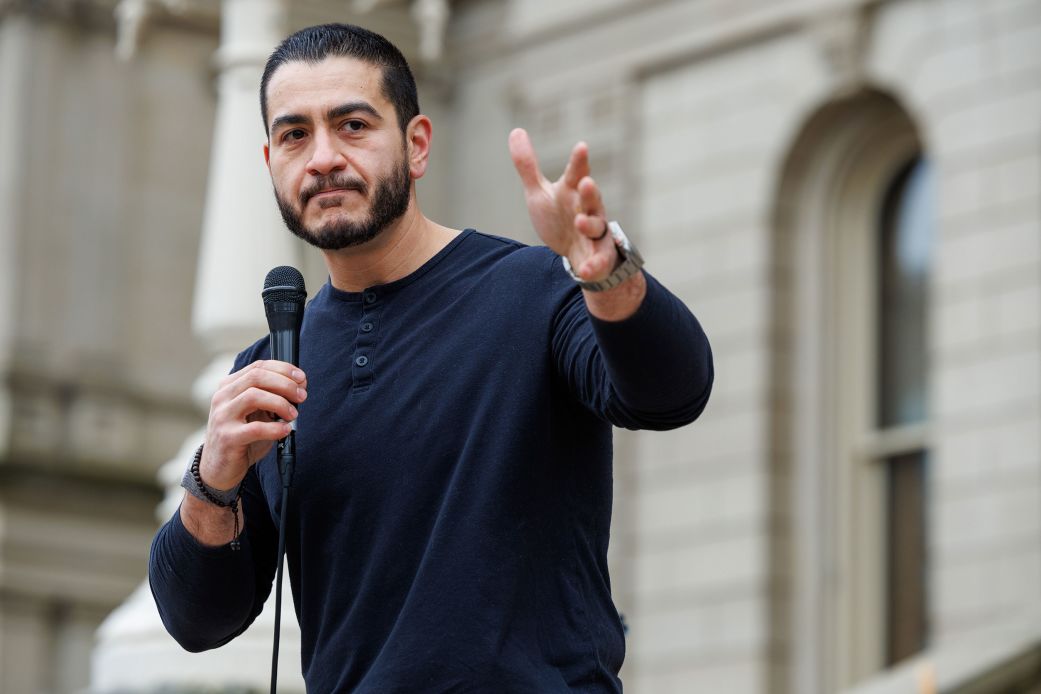
Michigan Democrats have chosen Abdul El-Sayed, a progressive favorite backed by Bernie Sanders and Elizabeth Warren, as their Senate nominee. The left’s victory lap has been enthusiastic, to put it mildly. But before anyone celebrates, voters deserve to hear what El-Sayed himself said about the framework guiding his life—not in a polished campaign ad, but in a candid moment when cameras weren’t rolling.
In a resurfaced 2009 interview, El-Sayed stated he felt religiously obligated to follow Sharia-compliant practices. “Ultimately,” he said, “when I die and I stand before God and go through everything I did in my life, I don’t want to say I did it the easy way instead of the Shariah-compliant way. Not because of fear but because of obligation.”
He did not frame this as a preference or cultural tradition; he chose the word obligation—a binding duty that overrides convenience and comfort. This is the man who wants to represent Michigan in the U.S. Senate.
El-Sayed was technically discussing a Sharia-compliant home loan when he made these remarks. His defenders will seize on that context, but the problem lies with the system itself: Sharia law carries foundational elements no amount of campaign spin can erase.
Sharia law has traditionally prescribed death for those who leave Islam, imposed harsh restrictions on women’s autonomy, and permitted child marriage. These are not fringe interpretations; they are core tenets of the legal tradition El-Sayed swore allegiance to.
His campaign now insists he “believes in separation of church and state” and “opposes any effort by any religious community to write their faith laws into our country.” Yet his record contradicts these claims. El-Sayed has publicly fought against legislative bans on Sharia, comparing such measures to the Trail of Tears and the Tulsa massacre. He labeled them products of “white supremacy.” So he claims to oppose religious law infiltrating government while simultaneously calling it racist when legislators try to prevent exactly that.
A candidate reveals himself through his associations. El-Sayed’s circle should alarm anyone still paying attention. He has maintained relationships with religious figures tied to Louis Farrakhan and the Nation of Islam—the same Farrakhan notorious for calling Jewish Americans “termites.” He appeared alongside far-left streamer Hasan Piker, whose 9/11 commentary would have ended any Republican’s career in about fifteen minutes. Senator Ted Cruz has publicly urged voters to investigate who is truly “behind” El-Sayed, citing alleged connections to Muslim Brotherhood-linked organizations.
The Democratic establishment has embraced him: Sanders praised his fight against the “billionaire class,” Warren applauded his dedication to working families, and DNC Chairman Ken Martin rolled out the welcome mat. The same party that champions women’s rights now backs a man who calls a legal system that subjugates women an obligation.
Michigan’s general election will determine whether El-Sayed reaches the Senate. Republican nominee Mike Rogers now stands between a self-declared Sharia adherent and one of the most powerful legislative bodies on the planet.
The Founders crafted the First Amendment to protect religious liberty, not to pave the road for theocracy. Abdul El-Sayed has told us plainly where his loyalties rest. Michigan has three months to decide whether it was listening.