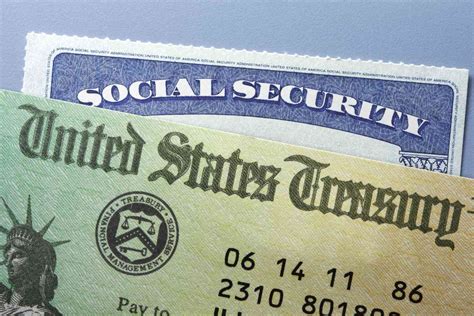
Tens of millions of Americans over 65 depend on Social Security as a lifeline—the monthly check that keeps mortgages paid, prescriptions filled, and lights on. The entire system rests on one fundamental assumption: federal bureaucracy can manage basic record-keeping without error.
Yet when an agency fails to reliably determine whether beneficiaries are alive, the consequences extend far beyond paperwork. A scathing new inspector general report exposes this systemic breakdown.
Mark Twain once humorously quipped about his premature death in the 1890s, but at the Social Security Administration, mistaken reporting of American deaths is no laughing matter.
The agency’s internal watchdog rebuked SSA workers for incorrectly reporting that 12,054 Americans died in 2025 who were actually alive, then repeatedly failing to follow proper procedures to correct these errors.
Twelve thousand living citizens—declared dead by their own government in a single year. This is not a rounding error; it’s a five-alarm institutional failure. And the initial mistake isn’t even the worst part.
What gets truly unconscionable is that according to the Office of Inspector General, 45% of erroneous death reports were never properly rectified. The agency botched fixes on nearly half its mistakes—this is not a correction process but a coin flip.
In at least one percent of cases, Social Security never restored benefits. Picture this: retirees who paid into the system for decades find themselves financially erased because a government employee clicked the wrong button, with no one returning to fix it.
The OIG spelled out the consequences:
“A living person who is incorrectly reported as deceased can suffer consequences when a Federal agency takes an action in error. Further, the release of incorrect death reports to the public can pose an even greater threat to Americans’ economic lives.”
This means frozen bank accounts, denied credit applications, background checks flagging you as dead, tax refunds stuck in limbo. Imagine a 73-year-old widow walking into her bank and discovering her accounts are locked—because Washington declared she doesn’t exist.
The OIG described SSA employees’ approach as “laissez faire.” Workers routinely skipped documenting why death entries were removed. No paper trail, no root cause analysis, no way to prevent recurrence.
This isn’t a glitch—it’s a culture of institutional indifference inside an agency that holds the financial fate of millions.
And here’s what should keep every near-retiree up at night: if Social Security marks 12,054 living Americans as dead in one year, how many benefit checks are flowing to individuals who have genuinely passed away? If the agency can’t manage basic alive-or-dead determinations, why would anyone trust its broader stewardship?
The SSA processes 5.6 million death reports annually. Officials might call 12,054 errors a mere 0.22% of the total—but that’s meaningless. A single American losing access to their livelihood because of government sloppiness is never trivial.
The OIG recommended corrective actions: better training, clearer documentation policies, stronger guidance. Yet such recommendations carry little enforcement power without congressional oversight and structural reform.
Americans who paid into Social Security deserve an agency that is competent, transparent, and accountable—not one that shrugs when it accidentally kills you on paper. Elected representatives must treat this report as a starting gun for real reform, not a footnote to file away.
When the government wields this much control over your financial survival, basic competence isn’t a nice-to-have. It’s a moral obligation.