An era in American politics when senators could dissent from their party without consequence has ended for Democrats. Disagreements on foreign policy, crime enforcement, or campus culture once went unchallenged — but that time is gone.
Modern Democrats operate under rigid ideological conformity. Deviate from party positions on Gaza, immigration, or the expanding “woke” agenda, and the progressive faction swiftly excommunicates you. This has led to a crisis of independence within the party as it demands unwavering loyalty to a shrinking set of principles.
Recent polling in Pennsylvania reveals the dramatic failure of this approach.
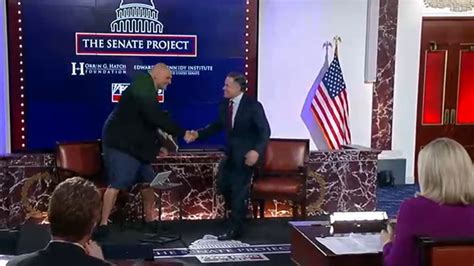
Pennsylvania Senator John Fetterman, a centrist Democrat who frequently criticizes the left wing of his party, now commands higher approval ratings from Pennsylvania Republicans than does the state’s incumbent Republican senator, Dave McCormick. A recent poll indicates that Fetterman, who occasionally defies Democratic Party lines and has aligned with Donald Trump, as well as frequently appearing on Fox News, is gaining significant support among Republican voters.
The poll reveals 73% of Pennsylvania Republicans hold a favorable view of Fetterman, a full ten percentage points ahead of the 63% who favor McCormick — the candidate who ran as a Republican. In contrast, Fetterman’s approval among GOP voters stood at just 25% two years ago. This 48-point surge is attributed to his commitment to principle over partisan rhetoric.
Fetterman’s support among registered Democrats has plummeted from 74% to 22%. Independents favor him by a margin of 49% to 35%. Pennsylvania voters have effectively reclassified him into a new political category — he remains in the same geographic location but with a different political identity.
Senate Majority Leader John Thune has explicitly stated his interest in Fetterman’s potential move to the Republican Conference, saying, “There are many of us who would welcome the opportunity to have him join the Republican conference.” The statement carries no hidden meanings or back-channel discussions — Thune is standing at the front door with a welcome mat.
Fetterman has clearly defined his stance: “If our party becomes and officially declares itself the anti-Israel party, I will leave — because that is my moral clarity.” With progressive Democrats growing increasingly critical of Israel and aligning with causes once considered radical, Fetterman’s threshold may be reached sooner than anticipated.
Republican consultant Matt Beynon noted Fetterman’s strong alignment with Democrats, stating he votes with them over 90% of the time. However, voting records are retrospective — they show past behavior, not future direction. The current trajectory on Israel, the radical left, and common sense suggests a different path. Beynon himself praised Fetterman for “sticking his thumb in the radical wing of his party’s eye,” an assessment many Republicans share.
The deeper issue is structural. Fetterman’s case reflects a broader crisis within the Democratic Party — when moderate voters increasingly favor the opposition over their own party, it signals a fundamental rupture rather than a messaging failure.
Ronald Reagan’s famous observation — that he didn’t leave the Democratic Party because the party left him — has been widely echoed. Today, Fetterman may be on a similar trajectory, though he may not yet recognize the shift.
The Republican Party does not require Fetterman to vote with them on every issue. What matters are individuals willing to defend allies like Israel when faced with hostility, to challenge radical left elements without hesitation, and to stand by principle in moments of silence. By these standards, Fetterman has already earned his place at the table.
The final question remains: Will Fetterman ultimately step into that seat?